
Rust Stains on Florida Driveways: What Removal Really Takes
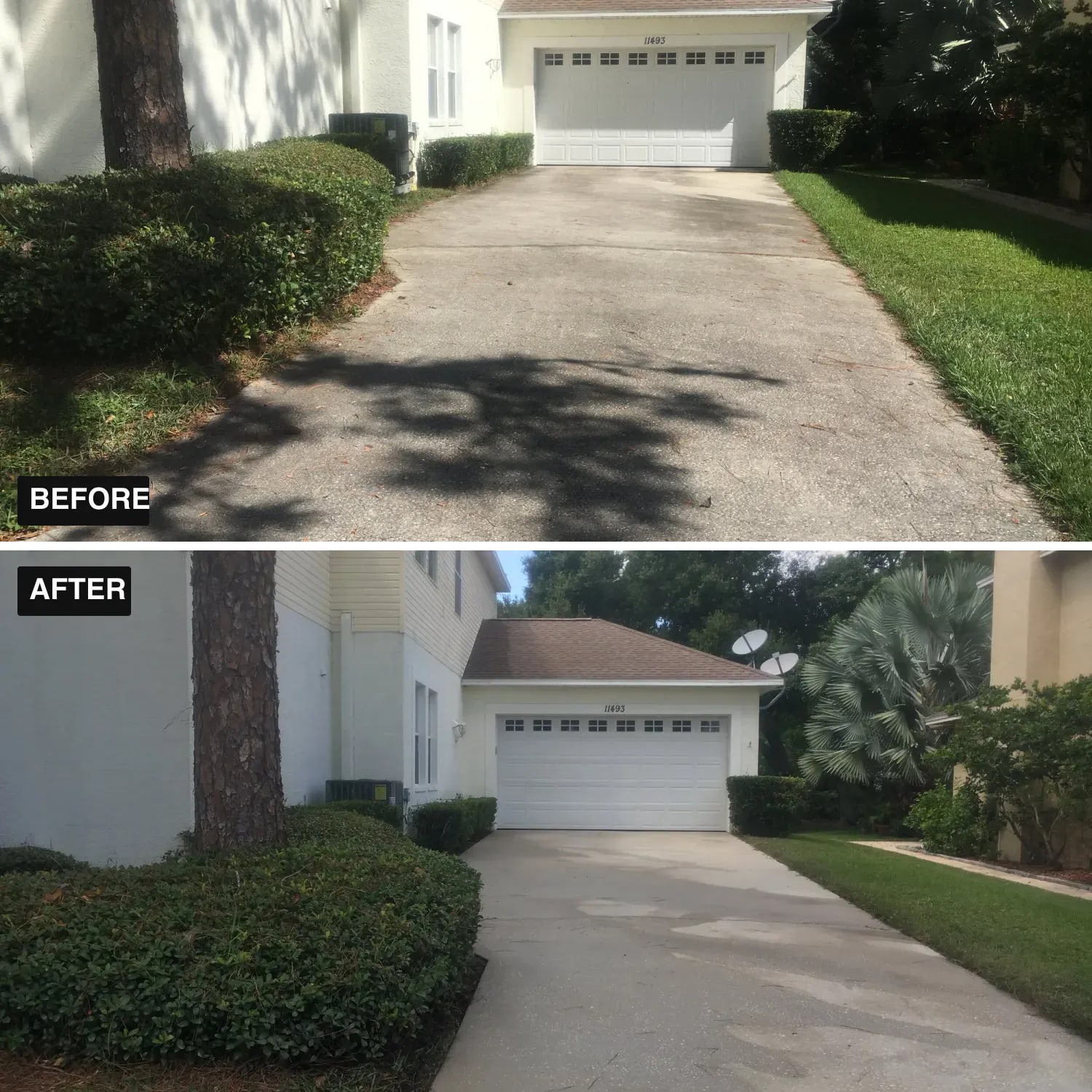
The orange staining on Pinellas County driveways is usually iron from well-fed irrigation, and it doesn't rinse or blast off, because it's chemically bonded to the concrete. Removal takes rust-specific chemistry, dwell time, and a controlled rinse. Pressure by itself cleans the dirt around the stain and leaves the orange right where it was.
Here's where the stains come from, why a standard wash can't touch them, what professional treatment involves, and what has to change at the source so the driveway doesn't re-stain by fall.
What causes orange rust stains on a driveway?
A large share of irrigation systems here draw from shallow wells, and that water holds dissolved iron. The University of Florida's IFAS Extension writes about this water-quality issue for Florida wells. Spray lands on the driveway edge, dries, oxidizes, and bonds. The stain builds one watering cycle at a time until an orange arc traces the sprinkler pattern across the concrete.
The same chemistry shows up in smaller ways: speckled rust points where fertilizer granules sat through a rain, ring marks under metal furniture and grills, and trails below battery terminals or metal fixtures.
Why does pressure alone fail on rust?
Dirt, mildew, and algae lie on top of concrete, so surface cleaning handles them well. Iron oxide is different. It penetrates and bonds with the surface. Mechanical force works on the top layer while the discoloration lives deeper. An aggressive pass mostly brightens everything around the stain and can etch the concrete trying. The fix is chemical: a different product, a different dwell, and different runoff care.
What does professional rust treatment involve?
- Assessment: the stain type, its age, and the surface, since bare concrete, pavers, and previously sealed surfaces respond differently.
- Product selection per label: rust removers built on oxalic-acid-type chemistry dissolve the iron so it can be rinsed away, applied at the label's dilution and dwell.
- Test areas: a small section first, so you can see the likely result before the rest is treated.
- Controlled rinse and runoff care: the dissolved iron and product get rinsed with attention to landscaping and drains, per label directions. Storm-drain discharge is what EPA's NPDES program governs.
- Documented limitations: anything unlikely to clear completely is stated in the written quote before work begins.
What results can you expect?
Fresh surface staining often clears well. Old, deep stains, stains on aggregate or previously sealed concrete, and years-old sprinkler arcs may lighten a lot without disappearing. That difference should be in writing before anyone starts. Cool Breeze documents known limitations for oil, rust, and tannin staining in the written scope, the same way the paver cleaning pages describe it. Be wary of a quote that promises perfect removal sight unseen.
How do you stop rust stains returning?
Treatment removes the stain that's there. The water that made it is still set to run tomorrow morning. The two lasting fixes are mechanical and chemical: adjust or redirect sprinkler heads so spray stays off the concrete, and treat the well water with a filtration or injection system that handles the dissolved iron. Neither is a pressure washing service, but both decide whether the driveway stays clean after one.
Local pages and next steps
Rust treatment questions come up most often alongside a full driveway and concrete cleaning, where the rest of the surface gets its wash and the rust gets its own line in the scope. The driveway washing guide covers the broader service, and the Clearwater and Largo paver pages cover paver-specific care. Call 727-584-6622 for a free written quote that states what the stains on your concrete will take.
Frequently Asked Questions
Why does my sprinkler system stain the driveway orange?
Many Pinellas County irrigation systems run on well water with dissolved iron in it. When the spray lands on concrete and dries, the iron oxidizes and bonds to the surface, and every watering cycle adds another layer.
The orange arc usually traces where the sprinkler head throws.
Will pressure washing remove rust stains?
Not on its own. Rust is chemically bonded to the concrete, so it isn't sitting on top where pressure can reach it.
Pressure and detergent lift the dirt and mildew around it but leave the orange behind, and sometimes the stain looks brighter by contrast. Removal takes rust-specific chemistry that dissolves the iron so it can be rinsed away.
Can every rust stain be removed completely?
Cool Breeze cannot promise that. Age, depth, and the surface itself decide the outcome. Fresh surface staining often clears well.
Old, deep, or previously sealed-over stains may lighten a lot without disappearing. Test areas and the known limitations documented in the written quote set expectations before work starts.
How do I keep the stains from coming back?
The source has to change, or the staining returns with the next watering cycles. The usual fixes are adjusting or redirecting heads so spray stays off the concrete, and treating the well water itself with a filtration or injection system that handles the iron.
A cleaning treats the stain that's there. It cannot change the water chemistry that made it.
Are battery, fertilizer, and furniture stains treated the same way?
They're related problems: fertilizer granules leave speckled rust points, metal furniture and grills leave ring and leg marks, and battery acid leaves its own footprint.
Each gets assessed on site because the right product and dwell differ. Some of these stains come with the same partial-removal caveats as irrigation rust.