10 Things to Know About Low-Pressure Cleaning
Low-pressure cleaning can change how compatible exterior surfaces look. A low pressure setting does not decide whether a method suits the surface, though. Here are ten things to consider when you decide whether low-pressure cleaning is right for your property.
1. Visible buildup can be documented
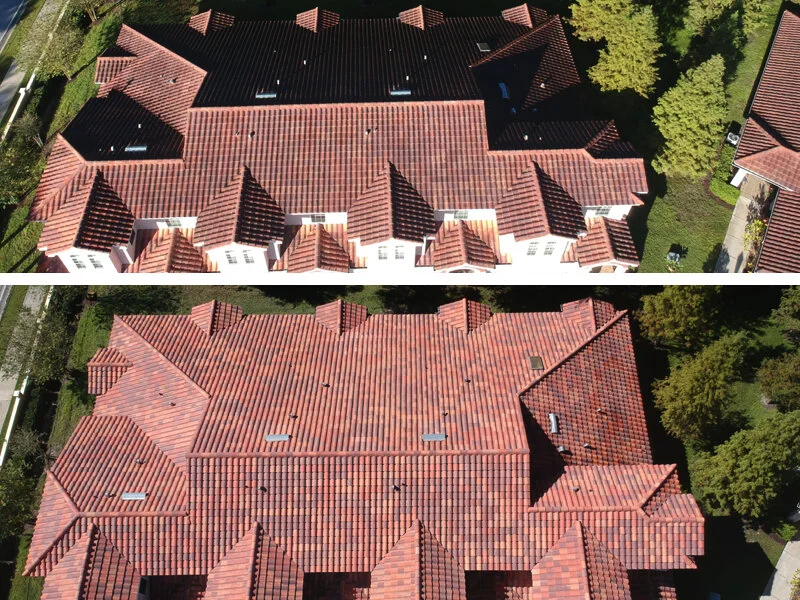
Dated photographs can document visible dirt or organic buildup before and after work. A photo does not prove anything about slip resistance, health, damage prevention, or the condition of the material.
2. Curb appeal is not property value
Removing compatible buildup may make a surface look cleaner. Cool Breeze does not promise a sale-price, appraisal, booking, or property-value increase.
3. Lower pressure changes one risk factor
Lower pressure can reduce the risks that come with too much pressure. Products, dwell time, rinsing, access, material, coating, repairs, and existing condition still affect the result. No method is risk-free for every surface.
4. Cleaning is not pest control
A cleaning scope can remove listed visible debris or buildup. It does not promise to deter, treat, or prevent insects, rodents, or other pests. For pest problems, call a qualified pest provider.
5. Exterior cleaning is not remediation
Exterior cleaning cannot tell you anything about the air inside the house. It does not identify a mold species or promise an allergy, illness, or other health outcome. If you suspect contamination or exposure, get a professional evaluation.
What do the numbers in a scope mean?
Two figures come up in almost every exterior-cleaning conversation. Soft washing is usually applied under 100 PSI. Pressure washing of sound hard surfaces such as concrete typically runs 2,000 to 4,000 PSI. If a scope names neither, it isn't describing a method.
The chemistry is the other half. Organic growth is treated with a diluted sodium hypochlorite solution blended with biodegradable surfactants, applied per the product label. The label sets the application conditions, dwell, rinsing, and the runoff controls that go with them.
Where do the standards come from?
For asphalt roofing, the Asphalt Roofing Manufacturers Association publishes guidance on algae discoloration and material-specific care, and individual shingle and tile manufacturers publish their own care instructions. For ladder work, OSHA's ladder-safety guidance sets a non-self-supporting ladder so the horizontal distance from foot to top support is about one quarter of the working length.
These documents describe accepted practice. They do not promise a result on any one property. That still depends on the property's documented condition.
Why is there no universal cleaning schedule?
Two houses on the same street weather differently. Shade, tree canopy, roof pitch and material, drainage, irrigation overspray, distance from open water, and how much growth has returned since the last cleaning all change the answer. Cool Breeze checks the current condition on the walkthrough and puts what it proposes in the written quote. It does not publish a set interval.
Frequently asked questions
Does exterior cleaning improve property value?
Removing compatible buildup may make a surface look cleaner. Cool Breeze does not promise a sale-price, appraisal, booking, or property-value increase, because sale prices depend on the property and local market.
Is exterior cleaning the same as mold remediation?
No. Exterior cleaning cannot tell you anything about the air inside the house. It does not identify a mold species or promise a health outcome. If you suspect contamination or exposure, get an evaluation from someone licensed for that work. In Florida, that's a separate trade.
What can be documented about a cleaning?
Dated photographs can document visible dirt or organic buildup before and after the work. They do not prove anything about slip resistance, health, damage prevention, or the condition of the material.
What does lower pressure actually change?
It changes one risk factor. Products, dilution, dwell time, rinsing, access, material, coating, repairs, and existing condition still apply. No method is risk-free for every surface.
6. Product and site controls should be explicit
The written method should identify product-label directions, dilution, water use, containment and runoff controls, landscape or pool precautions, and customer preparation. There's no measured comparison data behind this page, so it does not call the method eco-friendly or promise an environmental outcome.
7. Visible conditions can prompt follow-up
Cleaning may uncover a visible crack, loose coating, rot, or other condition worth documenting. It is not a roofing, structural, electrical, plumbing, drainage, or building inspection, and it does not promise avoided repairs.
8. Appearance is not service life
Removing compatible buildup may improve how paint or a finish looks. It does not prove a fixed life extension, warranty benefit, or avoided replacement cost.
9. Energy claims require measurement
For solar panels, follow the manufacturer’s cleaning and safety guidance. Removing visible soil does not prove any percentage change in energy output. Cleaning windows may change how much light comes through, but that does not prove an indoor-lighting or energy-saving result.
10. Delicate surfaces require specific guidance
Historic, fragile, coated, repaired, or otherwise delicate materials need a check of their condition and of the manufacturer, preservation, or material guidance that applies. A test area, exclusion, repair evaluation, or specialist may be the right call. A lower pressure setting does not make a method suitable for these materials.